
Understanding the Attacks: US and Israel's Stance on Iran
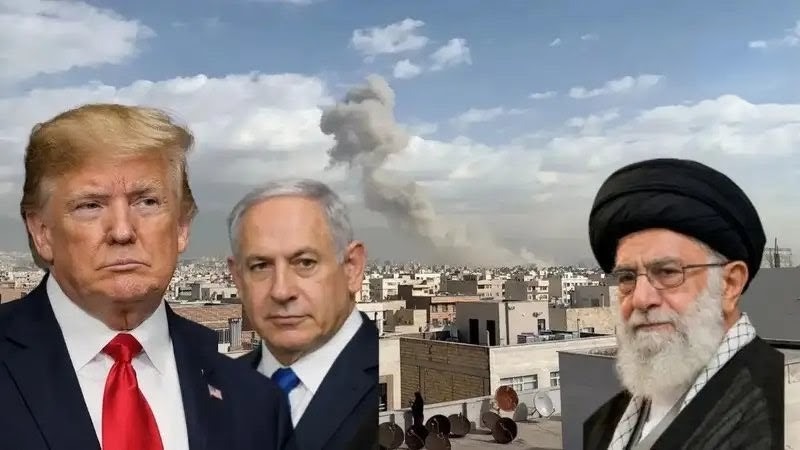
The United States and Israel launched coordinated attacks on Iran on February 28, 2026 known as Operation Roaring Lion (Israel) and Operation Epic Fury (U.S.).
Team-AapkaKona
2/28/2026
Historical Context of US and Israel's Relationship with Iran
The tensions between the United States, Israel, and Iran didn’t start recently. They are rooted in decades of political upheaval, ideological conflict, regional rivalry, and nuclear disputes. Here are the key historical factors:
In 1953, the U.S. and the U.K. backed a coup that removed Iran’s democratically elected Prime Minister, Mohammad Mosaddegh, after he nationalized Iran’s oil industry.
The coup restored the Shah, Mohammad Reza Pahlavi, who ruled as a pro-Western monarch. Many Iranians view this as the beginning of U.S. interference in Iran’s sovereignty, which fueled anti-American resentment.
In the aftermath of the Iranian Islamic Revolution in 1979, the Shah was overthrown in the Islamic Revolution, and Ruhollah Khomeini established an Islamic Republic( Shortly after, Iranian students seized the U.S. Embassy in Tehran, triggering the Iran Hostage Crisis, where 52 Americans were held for 444 days.). The new regime was strongly anti-U.S. and anti-Israel, that leads a Iran to transition from a US ally to a prominent adversary. After the 1979 Iranian Islamic Revolution, Iran transformed from a relatively friendly nation under the Shah into an Islamic Republic that openly opposes Israel’s existence.
Before 1979, Iran and Israel had quiet cooperation. After the revolution, Iran declared Israel illegitimate and began supporting anti-Israel groups such as Hezbollah and Hamas. Iranian leaders have frequently rejected Israel’s legitimacy, calling it an “enemy regime” in the region. This fundamental ideological divide — between Iran’s Islamic republic and Israel’s Jewish state — has fuelled deep mutual distrust. This animosity cultivated a partnership between the US and Israel, both perceiving Iran as a regional threat owing to its nuclear aspirations and support for proxy militant organizations. The geopolitical landscape has been molded by a succession of events, including the Iran-Iraq War, the 2003 invasion of Iraq spearheaded by the US, and ongoing disputes surrounding nuclear capabilities.
The Geo-Political Conditions of Current Attacks
The central and most cited geopolitical driver is concerns over Iran’s nuclear activities. Iran has developed uranium enrichment capabilities that many in the West and especially Israel view as a potential pathway to a nuclear weapon — even if Iran insists its program is peaceful.
In recent years, tensions have escalated as both the US and Israel have adopted confrontational stances towards Iran. The US withdrawal from the Joint Comprehensive Plan of Action (JCPOA) in 2018, a pact designed to restrict Iran's nuclear program, signified a critical turning point. After the U.S. withdrew from the 2015 nuclear deal (JCPOA) in 2018, Iran resumed higher levels of enrichment, heightening fears of a “nuclear breakout.”This decision not only strained US-Iran relations but also emboldened Israel to execute targeted attacks against Iranian assets in Syria and other regions. Israel is apprehensive that a nuclear-capable Iran could represent an existential threat, motivating the country to undertake pre-emptive strikes. The role of extremist groups in contributing to regional instability further complicates these dynamics, necessitating vigilant monitoring of Iranian activities by both nations.
Iran has developed the largest and most diverse missile arsenal in the Middle East. Because Iran’s conventional air force is dated, it has invested heavily in precision-guided ballistic missiles and suicide drones (UAVs). The U.S. and Israel launched attacks in 2026 to neutralize these launch sites before they could be used against U.S. bases in the Gulf or Israeli population centers.
Geopolitics is often inseparable from the flow of oil and gas. The Strait of Hormuz: Iran sits on this vital chokepoint, through which roughly 20% of the world’s petroleum passes. Iran has frequently threatened to close the Strait in response to sanctions. The U.S. military presence in the region is largely designed to ensure "freedom of navigation" and prevent Iran from using the global economy as a hostage in political negotiations.
In 2026, widespread internal protests and a weakened economy led the U.S. and Israel to believe the regime was at its most vulnerable, prompting strikes aimed not just at military hardware, but at regime change.
The Impact of an Attack on the
World Economy
Since the joint U.S. and Israeli military operations against Iran began on February 28, 2026, the global economy has faced a series of "sharp shocks" primarily centered on energy security and maritime trade.
The Strait of Hormuz, a key bottleneck for almost 20 % of the world’s oil and LNG shipments, became a flashpoint. Even the risk of disruption is pushing oil prices sharply upward, the effective closure of the Strait by Iran has forced a massive logistical shift. Vessels are being diverted around the Cape of Good Hope, adding 10–15 days to transit times and significantly increasing freight and insurance costs.
Brent crude prices surged 10–13% within the first 48 hours, climbing from roughly $70 to over $82 per barrel. While prices briefly dipped on March 4 following rumors of backchannel talks, they remain highly sensitive to any further escalation.
European gas prices nearly doubled after retaliatory strikes affected Qatari LNG facilities. Although prices retreated slightly to €48/MWh by March 4, the risk to heating and industrial costs in Europe remains acute.
Stock indices in the U.S. and Europe have seen significant drops as investors weigh geopolitical risk. The Dow Jones saw a 400-point drop early in the week, while Japan’s Nikkei and South Korea’s KOSPI recorded "crash-level" losses due to their extreme reliance on Middle Eastern oil (Japan imports ~90% of its oil from the region).
Safe-haven assets such as gold and the U.S. dollar have rallied as investors seek protection from uncertainty. Gold and silver have seen double-digit gains in 2026, with Gold trading near $5,400 an ounce as investors flee "risk assets
Rising fuel and electricity costs globally, Higher transportation and manufacturing costs, Central banks may delay easing or keep rates higher to fight inflation. Nations like India, Japan, and many in Europe import most of their energy. Higher prices increase import bills and pressure inflation, affecting macroeconomic stability. Some Gulf exporters may benefit from higher prices, but global demand can weaken if inflation-driven recessions take hold. Business and tourism in the region have been hit by disrupted travel and investor caution.
The Impact of International Relations on Future Strategies
The escalation of the conflict in the Middle East, occurring against the backdrop of a "multipolar" 2026, has forced a fundamental shift in how corporations and nations plan for the future. Strategy is no longer just about efficiency and market share; it is now defined by geopolitical resilience. These strategies will evolve in areas like security, alliances, nuclear policy, energy strategy, and global power balance, the conflict is accelerating the division of the world into geopolitical blocs.
The Shift from "Global" to "Regional, an era of hyper-globalization—where components were sourced from wherever they were cheapest—is being replaced by regionalization.
The international community remains fragmented regarding the approach towards Iran. Sanctions imposed by the United States have curtailed economic engagements; however, nations such as Russia and China sustain complex relationships with Iran, would strengthen strategic cooperation with Iran, presenting challenges for the strategies of both the US and Israel, while the U.S. will deepen security ties with its allies in the Middle East and Europe.
The evolving alliances in the Middle East affect counter-terrorism efforts and military strategies alike. Moreover, public sentiment, both domestically within the US and on the international stage, plays a pivotal role in influencing future actions. Moving forward, comprehending the interplay of these historical, political, and social factors is vital for predicting the future trajectory of US and Israeli engagements concerning Iran.
The 2026 disruption of the Strait of Hormuz has accelerated plans for supply chain "redundancy." Businesses are now willing to pay higher costs for local manufacturing to avoid the risk of a single maritime "choke point" paralyzing their entire operation. Governments in 2026 are treating AI foundation models and computing infrastructure as national security assets.
Future corporate strategies must now manage fragmented digital landscapes. For instance, a company operating in both the US and the EU may need to maintain two entirely separate AI and data ecosystems to comply with diverging regulations and security standards.
Countries like India are leading a new "global playbook" of multi-alignment. In 2026, India serve as the chair of BRICS while simultaneously hosting the QUAD summit. Strategy teams are no longer betting on a single trade outcome (like a US-India trade deal). Instead, they are hedging by building partnerships across multiple power centers to ensure they aren't left stranded if one alliance suddenly shifts. Geopolitical tensions are already pushing nations to develop alternative financial systems and payment networks to reduce reliance on Western institutions.
Countries are likely to invest more in drones, cyber warfare, missile defense, artificial intelligence in military systems. Countries like India, Turkey, Saudi Arabia, and Brazil may pursue more independent foreign policies, balancing relations with both Western and Eastern blocs, securing energy supplies, avoiding direct alignment with major powers.
This reflects a shift toward a multipolar world order.
Follow & Connect us on
© 2025. All rights reserved
Stay Informed with Us
Join us for latest news & insightful stories and timely updates.